Your furnace makes a noise it’s never made before and there’s a smell, and now you’re standing in the hallway at 6 a.m. wondering if this is a quick fix or the start of a much bigger bill.
It comes down to your furnace’s age, its repair history, and a couple of warning signs that mean the decision isn’t really yours to make anymore. Let’s walk through how to tell the difference.
Start With Age
Most furnaces have a lifespan somewhere between 15 and 20 years, and how long yours lasts comes down to fuel type and how consistently it’s been maintained. Gas furnaces tend to be on the shorter end of that range, while electric furnaces with fewer moving parts can stretch out a little further. If your system is pushing 15 years and something breaks, that age is doing a lot of the talking already.
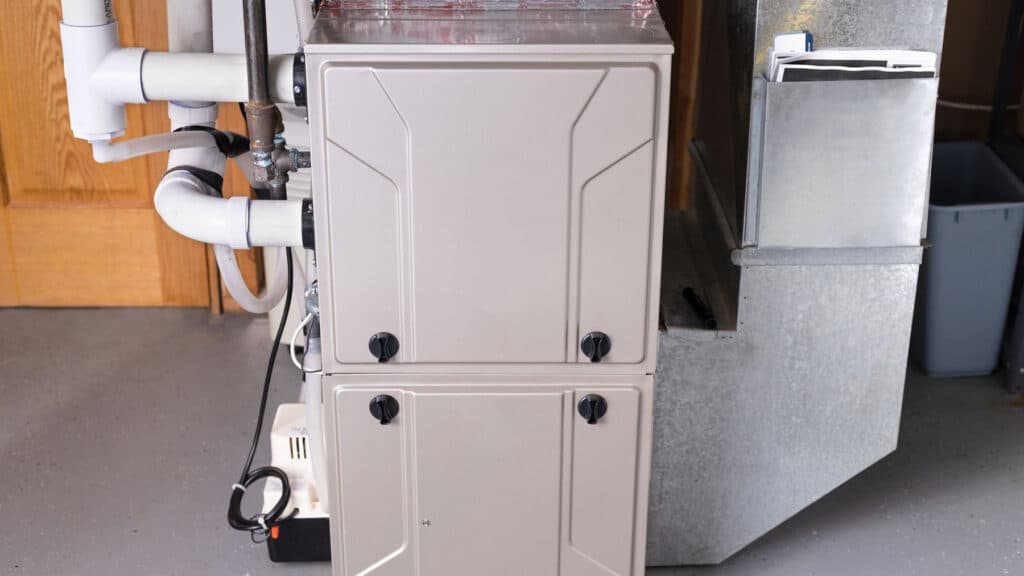
Not sure how old your unit is? Check the serial number on the data plate, or take a look at the furnace itself. Rust, a pilot light instead of an electronic ignition, and general wear are usually a sign of older technology that alone is a sign it’s closer to the end of its run.
The $5,000 Rule (It’s Simpler Than It Sounds)
HVAC pros use a quick gut check called the $5,000 Rule to cut through the guesswork. Multiply your furnace’s age by the estimated repair cost. If the number comes out above $5,000, replacement is usually the smarter move. If it lands well under, repair is often worth it.
It’s not a perfect formula, and it doesn’t account for rebates, efficiency increases, and the better comfort you’d get from newer equipment, but it’s a fast way to see where you stand.

Signs That Take the Decision Out of Your Hands
There are some situations that aren’t a math problem. They’re safety concerns or problems, and that’s when it’s time for a new furnace regardless of what the age-times-cost equation says.
- A cracked heat exchanger. This part separates your breathing air from the combustion process, and once it cracks, it can’t be safely repaired. The heat exchanger or the whole furnace has to go.
- A yellow or flickering flame instead of steady blue. This usually points to incomplete combustion, which can mean elevated carbon monoxide levels. Shut the system down and call for an inspection.
- Soot around the burners or cabinet. A telltale sign that fuel isn’t burning the way it should.
- A carbon monoxide detector going off, or household members with unexplained headaches, nausea, or flu-like symptoms when the furnace is running. Get everyone outside, ventilate, and get it looked at immediately.
None of these on their own automatically means a new furnace is coming home with you, but they’re signs that you need to get a technician’s eyes on it.
Other Signals Worth Weighing
A few less dramatic clues are still worth paying attention to:
- Heating bills that keep climbing without a change in weather or usage
- A furnace that short-cycles, turning on and off without ever quite reaching the temperature you set
- Repairs that keep happening, especially more than one major fix within a year.
One of these on its own might just mean a tune-up, but two or three together on a furnace pushing 15 years is usually the point where repair stops making sense financially.
What a New Furnace Actually Buys You
Modern high-efficiency furnaces run at 90 to 98 percent AFUE, a meaningful jump from systems installed even a decade ago, which shows up directly in your monthly gas bill.
Utah homeowners have a local option worth knowing about, too. Enbridge Energy’s ThermWise program offers rebates on qualifying high-efficiency gas furnaces, so it’s worth asking your technician or estimator which models qualify before you settle on equipment. The federal tax credit that used to apply to furnace upgrades expired at the end of 2025, so utility rebates like ThermWise are currently the most reliable savings on the table for Utah homeowners planning a replacement.

Where Manwill Plumbing and Heating Fits Into This
We’ve been keeping Utah homes warm since 1920, and one thing hasn’t changed in all that time: we’d rather tell you the truth than sell you a furnace you don’t need yet. Our NATE-certified technicians will look at your system’s age, its condition, and its repair history, then give you a straightforward recommendation, whether that’s a repair or a replacement.
If your furnace is acting up, or you’re just not sure what a rattle or a rising gas bill actually means, reach out. We’re available 24/7.